When ESG — Environmental, Social, and Governance — is discussed in boardrooms, the conversation often gravitates toward carbon metrics and governance frameworks.
Environmental targets are measurable. Governance structures are documentable.
But the "Social" dimension — the human layer — is where long-term performance is either strengthened or quietly eroded.
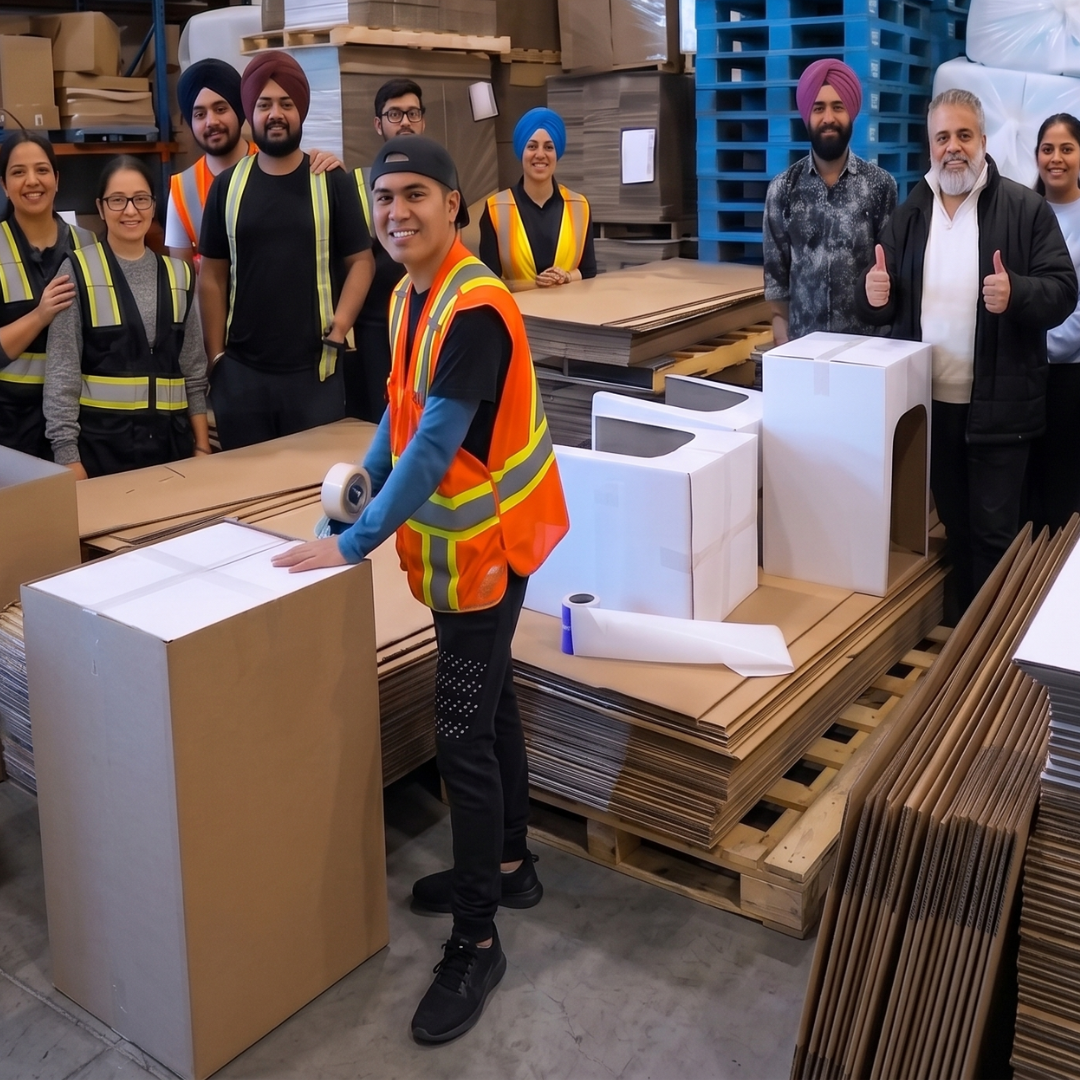
In manufacturing and private-label supply chains, the "S" is not abstract. It lives in factories, in forecasting meetings, in vendor negotiations, in warehouse shifts, and in the way decisions ripple across organizations.
Supply chains are often described through logistics models and cost structures, but beneath those systems sits something far more complex: a network of human commitments.
A cost negotiation has a counterpart somewhere upstream.
A production acceleration travels through someone's weekend.
A forecast revision forces a line manager to reconfigure an entire shift.
Operational decisions rarely stay operational. They become human.
At Industria, we've been asking a harder question:
If our value chain creates economic value, does it also create human value?
Because sustainable growth without human alignment is not sustainable at all.
To understand how this shows up in practice, we return to three principles that shape how the social dimension of ESG becomes operational: standards, stewardship, and substance.
Standards: Culture Before Compliance
When people hear the word standards, they often think of policies — supplier codes of conduct, audit protocols, and certification frameworks.
Those are necessary. But they are not sufficient.
In practice, standards are cultural long before they are contractual. They show up in expectations: how partners are selected, how suppliers are treated when timelines compress, and how transparently companies communicate when pressure builds.
The moments that test standards are rarely documented ones. They appear when forecasts change suddenly, when demand surges unexpectedly, or when cost pressures intensify across the value chain.
In those moments, organizations reveal whether their standards are operational — or merely aspirational.
Companies that embed standards into daily decision-making build supply chains defined not by urgency, but by clarity and trust.
Stewardship: Supply Chains as Ecosystems
Modern supply chains are frequently managed as transaction chains — sequences of orders, shipments, and invoices.
But in reality, they behave much more like ecosystems.
Factories coordinate thousands of labour hours across multiple product lines. Suppliers balance commodity markets, production planning, and workforce stability. Retail timelines cascade backward through each layer of the value chain.
When companies treat these networks as purely transactional, resilience tends to disappear precisely when it is needed most.
Stewardship requires a different perspective — one that recognizes that every operational decision has a human footprint somewhere in the system.
Organizations that approach their supplier networks as long-term ecosystems tend to build deeper stability, stronger partnerships, and greater adaptability under pressure.
Substance: Measuring What We Say We Value
The social dimension of ESG becomes meaningful only when it moves from narrative to measurement.
For many organizations, that measurement increasingly appears in operational indicators such as:
- Workforce retention and engagement
- Safety performance across facilities
- Supplier continuity and partnership stability
- Delivery performance achieved without chronic overtime or burnout
These metrics reveal something policies alone cannot: whether organizations are building systems that support both performance and people.
Substance also requires embedding these indicators into leadership expectations. Culture cannot exist only in internal values statements. It must appear in scorecards, planning processes, and operational decision-making.
When it does, the "S" in ESG stops being an aspiration and becomes part of how the business actually runs.
Which brings us back to the question we continue to ask ourselves:
If our value chain creates economic value, does it also create human value?
At Industria, the answer must be yes — not aspirationally, but operationally.
Because standards set the floor.
Stewardship sustains the system.
Substance proves our convictions.
The word social comes from the idea of human association — the relationships through which people work, exchange, and build together.
Long before ESG became a framework, it described something fundamental: that progress is created through cooperation among people.
Technology will reshape how supply chains operate. Data will accelerate how decisions are made.
But one truth will remain constant:
Performance has always been — and will always remain — a human endeavour.